How I Run an AI Product Team for $120 a Month
Claude Code, Claude Design, and ChatGPT

A solo product planner now works with an AI team.
My development team is split into two groups.
Team 1 is Claude Code.
Team 2 is ChatGPT Codex.
The design team is Claude Design, responsible for the overall UI/UX direction.
The labor cost is simple: Claude costs $100 per month, and ChatGPT costs $20 per month. In total, that is $120 a month. Because the Korean won has weakened so much, that comes out to roughly 180,000 won. If the exchange rate were still around 1,100 won per dollar, it would have been closer to 130,000 won.
A little complaint here: for someone like me who pays for a lot of subscriptions in dollars, this exchange rate is brutal. I really hope someone comes up with a policy that stabilizes it.
The reason I have two development teams is that their work is separated.
Claude Code handles the actual coding.
ChatGPT Codex handles code review.
Both teams have access to GitHub, but commits and pushes are done only through Claude Code.
So how can we apply real-world PM work to an AI team?
Let’s take a look.
I Do the Planning. AI Does the Work.
In a typical company, the workflow goes something like this.
A PM writes a requirements document.
The document is passed to the design team.
The design team creates a draft in Figma.
The UI specs are then handed over to the development team.
The developers finally begin implementation.
Inside this process, there are countless meetings.
Each team negotiates deadlines.
Every team says, “This is not possible,” or “That will take more time.”
A week disappears through endless back-and-forth.
Then everyone rushes to meet the deadline, works overtime, and eventually ships the update.
But then a bug appears.
The team fixes the bug, starts planning the next feature, and falls into another endless loop.
That is the usual corporate process.
But what happens when your team members are AI?
The PM does not even need to write a formal requirements document.
I can simply explain the idea to my team in plain language.
For example:
“While keeping the current tone and manner, please design the UI/UX so that the number of people in a group alarm room is limited and users can communicate with each other.”
Claude Design never says, “That’s impossible.”
The deadline rarely exceeds 10 minutes.
Instead, it quietly asks questions about the parts it does not understand and gives me options to choose from.
Press enter or click to view image in full size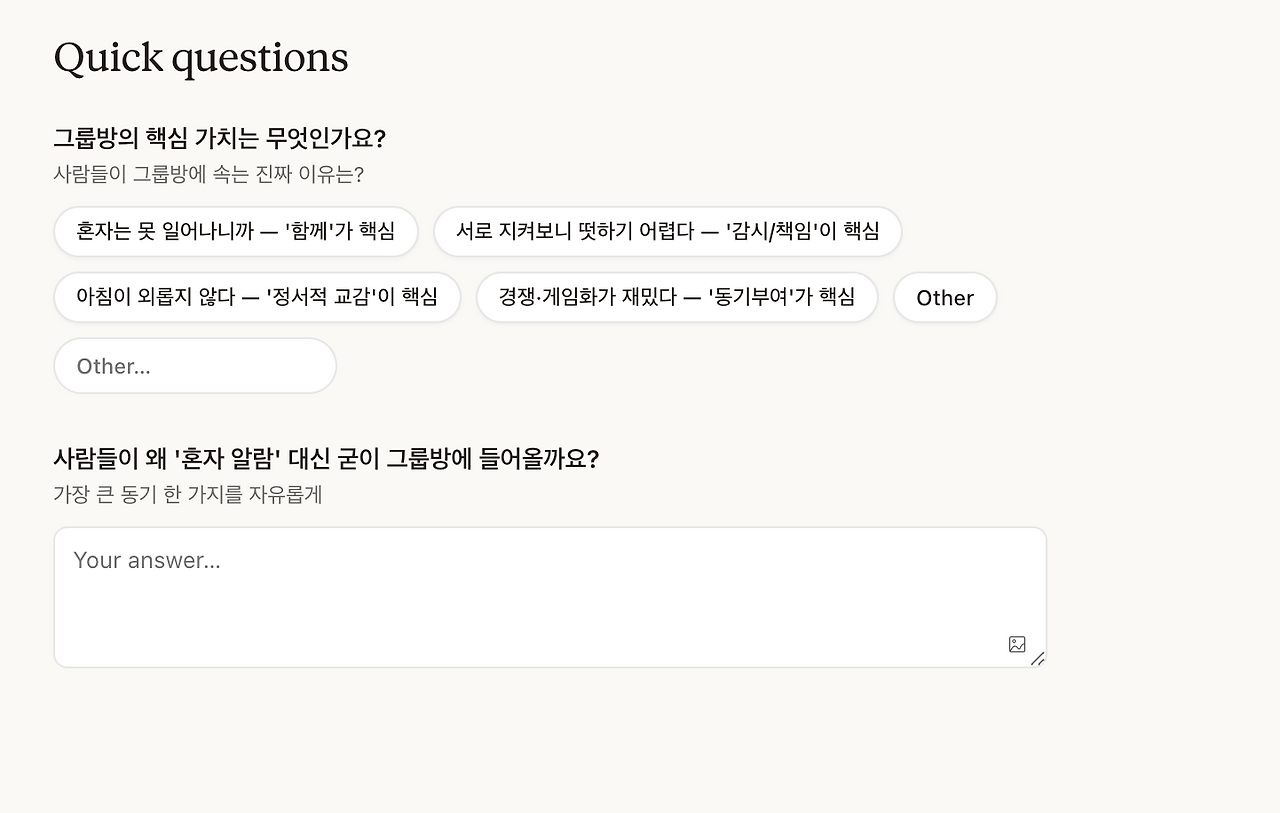
Claude Design asks questions
Once I answer those questions, Claude Design creates the design on its own.
Press enter or click to view image in full size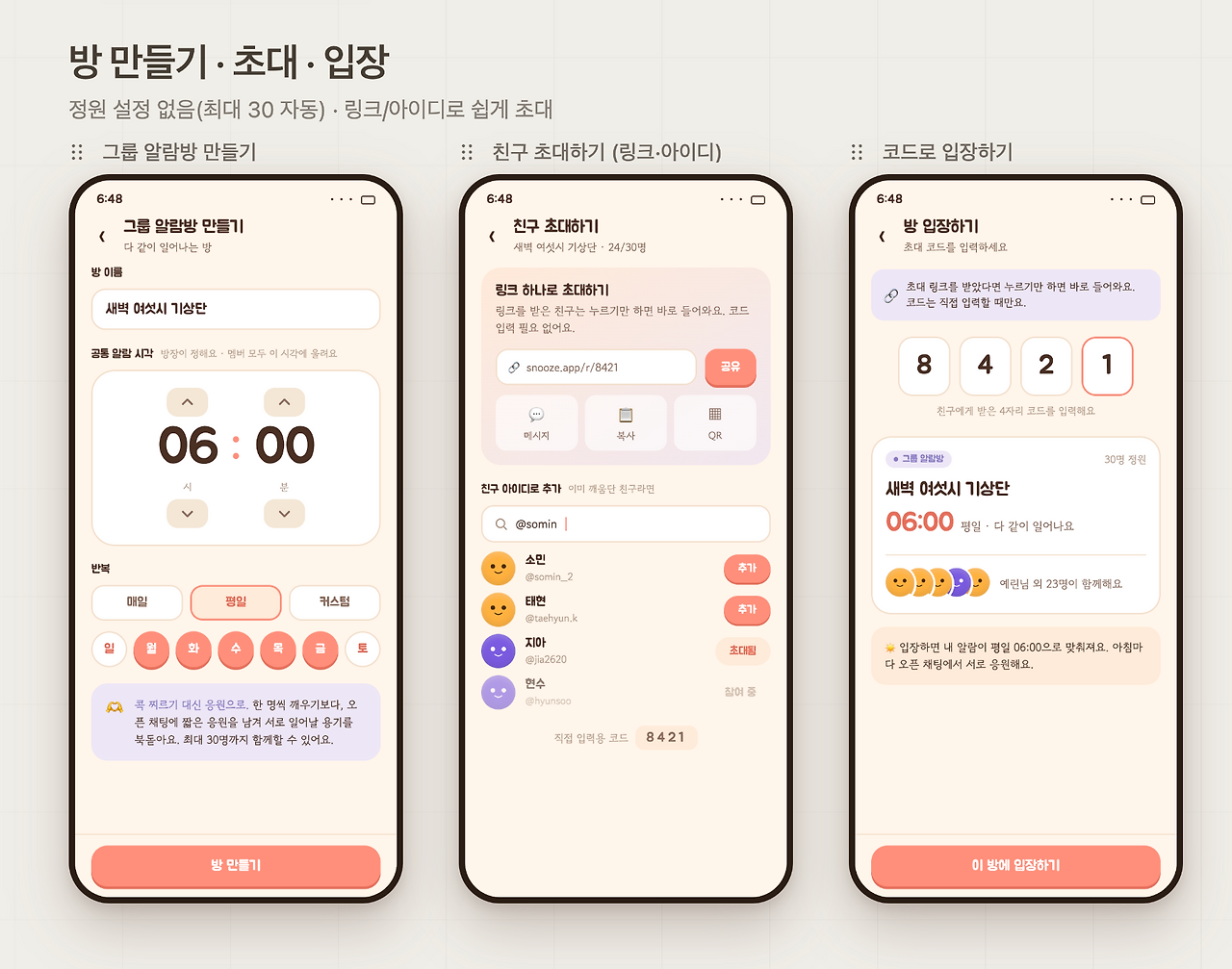
If I do not like something, I simply ask for revisions.
In most cases, the whole task is completed within five minutes.
The best part is that the design is delivered in HTML format, so I can test it immediately.
Once the design draft is complete, I can copy the URL and send it directly to Claude Code.
Then I copy the command and hand it to Claude Code, and it begins development.
Press enter or click to view image in full size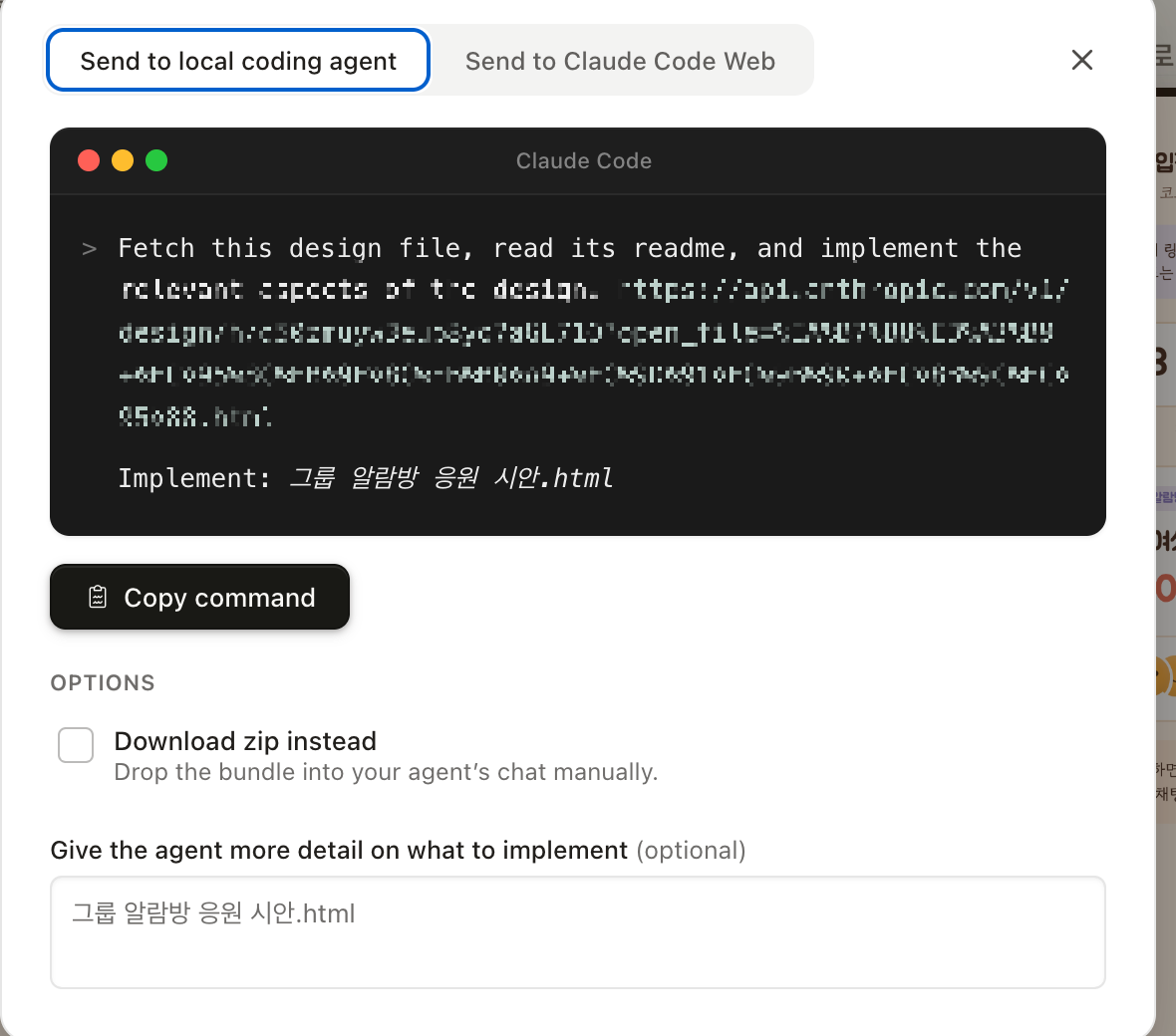
Copy command then hand it over to Claude Code
After the development work is done, I ask Codex for a code review.
After a few rounds of back-and-forth, I push the update to the Play Store and publish the release notice.
A task that would normally take a week of struggling can now be done with an AI team in less than 10 minutes.
Defining the Direction of Kkaeumdan
Kkaeumdan originally started as a product where friends could set their own alarms, send push notifications to each other when they woke up, and help each other get out of bed.
The first target users were friend groups.
The early concept was simple: friends wake each other up, compete with each other, and maybe the person who wakes up last has to buy a meal the next time they meet.
Every time the product direction changed, Claude Design preserved the design history.
Icons, early UI, logos, and every UI/UX variation remained archived inside Claude Design.
Press enter or click to view image in full size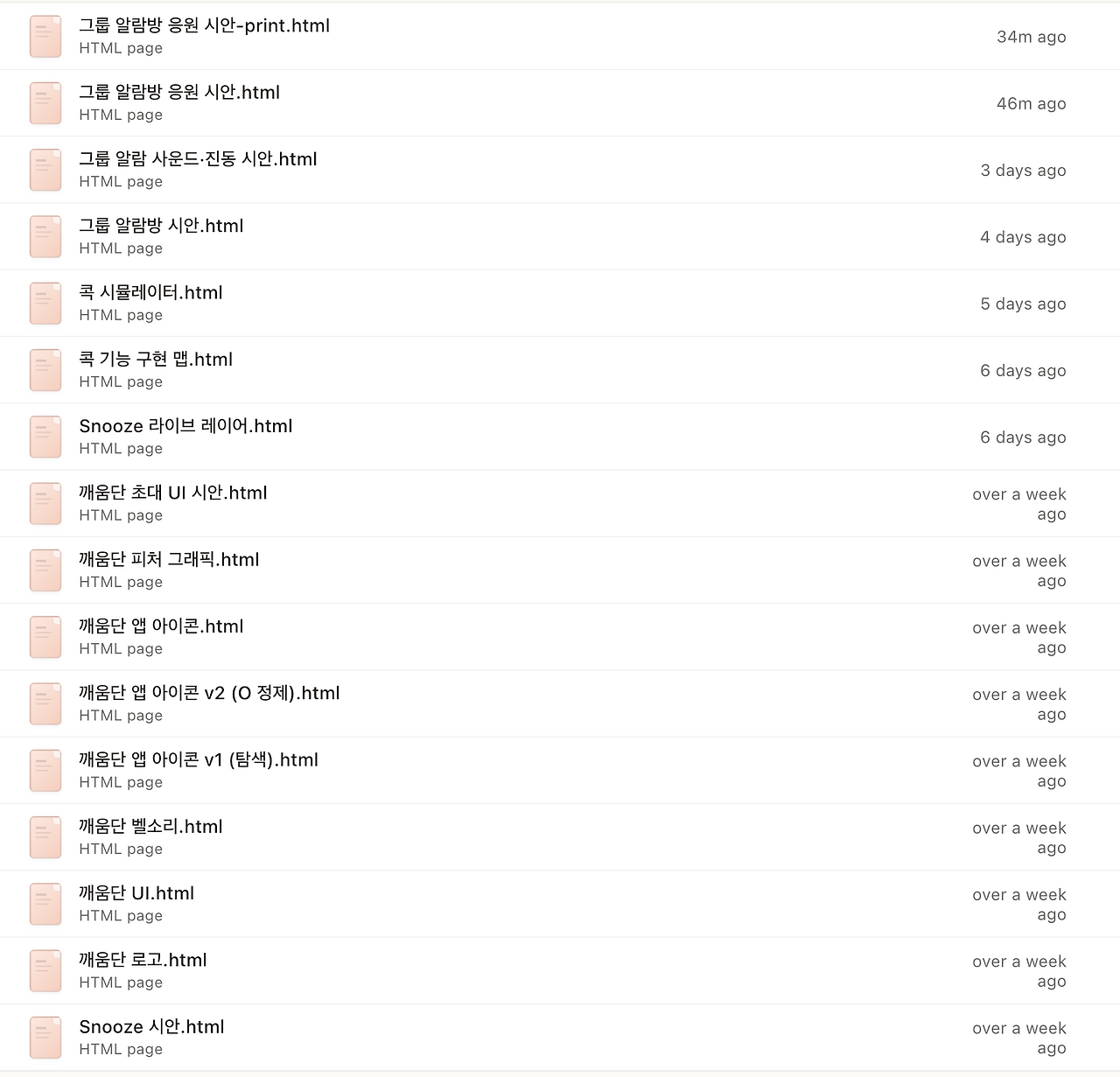
At one point, the plan was to use a feature called “Poking,” where friends could poke each other awake.
Even the UX details of that concept were shaped together with Claude Design.
Press enter or click to view image in full size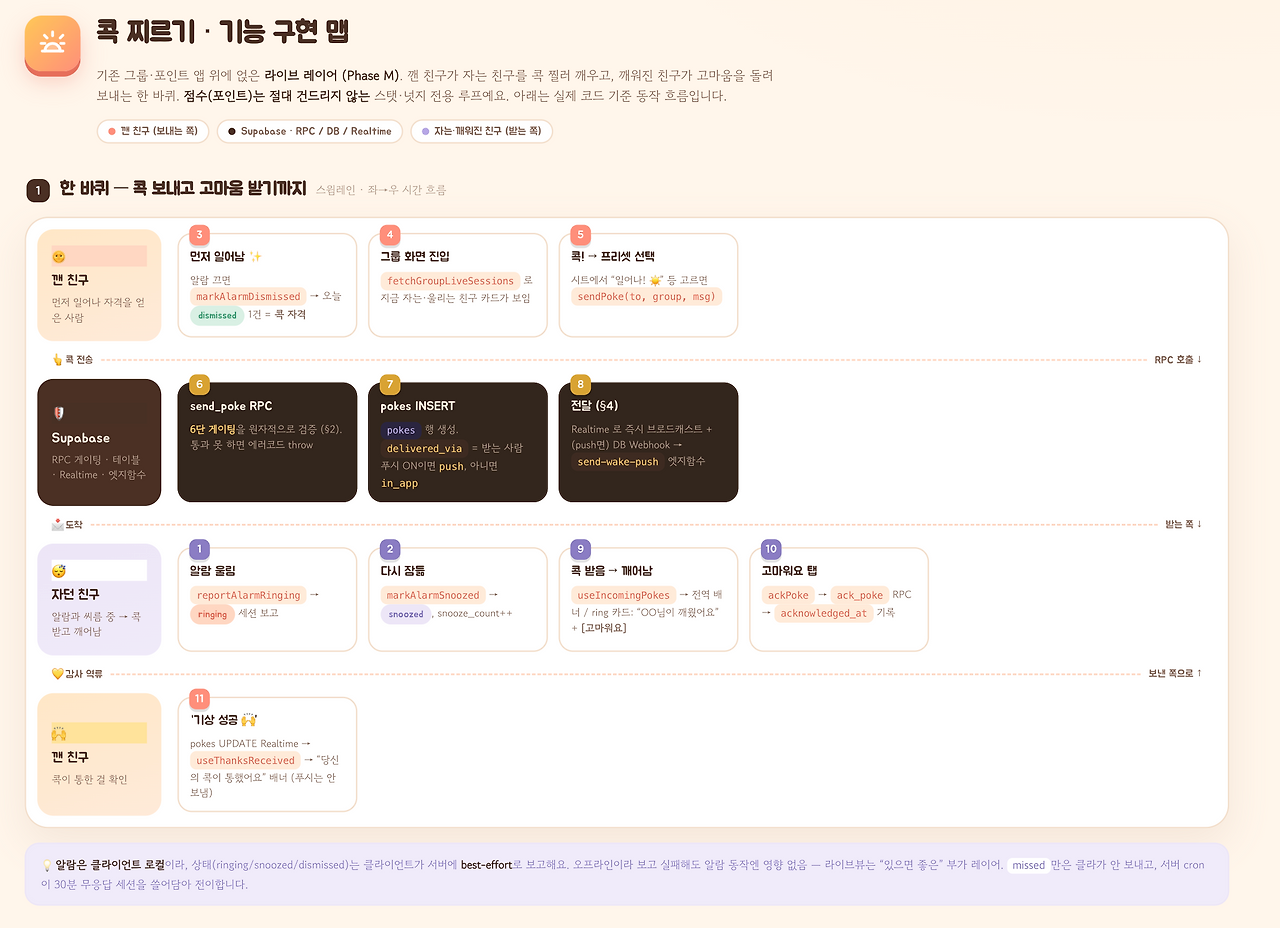
But then I had another thought.
What if we created a group alarm where everyone shared the same alarm time?
What if the alarm room could include a larger number of people?
That would make the beta test much easier to understand for the general public.
The reason is simple.
Individual alarms do not always create a clear sense of purpose.
But a group alarm creates one shared goal.
A friend group already knows each other.
But a social ecosystem made up of strangers who share the same goal feels much more scalable.
That gives people a clear reason to use Kkaeumdan.
And to build this kind of product, the process matters.
Bring the AI team together to build the product. Bring people together to create an activity.

If you are an NBA fan, you probably know the phrase “Trust the Process.”
This phrase did not originally come from Joel Embiid.
It referred to the rebuilding strategy started by Sam Hinkie, the general manager of the Philadelphia 76ers in 2013.
Hinkie gave up short-term wins and deliberately endured losing seasons in order to collect high draft picks and young prospects. The long-term goal was to eventually build around a superstar.
It was not about trusting the result.
It was about trusting the process.
The phrase became almost like a belief system that helped the team endure terrible seasons, including records like 19–63 and 10–72.
In 2014, Hinkie drafted Joel Embiid.
Because Embiid had a foot injury, many teams hesitated to pick him. But the Sixers did not need to win immediately, so they took the risk.
Embiid had to wait two years before making his debut.
Later, he began calling himself “The Process,” becoming the symbol of that entire rebuilding era.
Hinkie himself was removed before he could see the full result, but the seeds he planted eventually grew.
Personally, I think the phrase fits today’s San Antonio Spurs even better as they rebuild around Victor Wembanyama.
But the core idea remains the same.
Do not obsess over the immediate result.
Trust the process.
Bring the AI team together to work.
Bring people together to create shared activities.
And quietly believe in the unglamorous middle part.
That is the direction we need to follow.
Get the next one in your inbox
One email per new post. No spam, unsubscribe anytime.
By subscribing you agree to our privacy & marketing email policy.