AI Is Just the Guide Hand. You Still Take the Shot
What Sakuragi Hanamichi Taught Me About Building Products with Claude
If you’re interested in building AI products, I highly recommend reading AI Engineering by Chip Huyen.
AI Engineering: Building Applications with Foundation Models
AI Engineering: Building Applications with Foundation Models [Huyen, Chip] on Amazon.com. FREE shipping on qualifying…www.amazon.com
It’s a thick book, but the core idea is surprisingly simple.
The foundation model — the engine — already exists as an off-the-shelf product like ChatGPT or Claude. So you don’t build the engine from scratch.
You use it, and the real engineering happens on top of it: prompts, RAG, fine-tuning, evaluation, and product design.
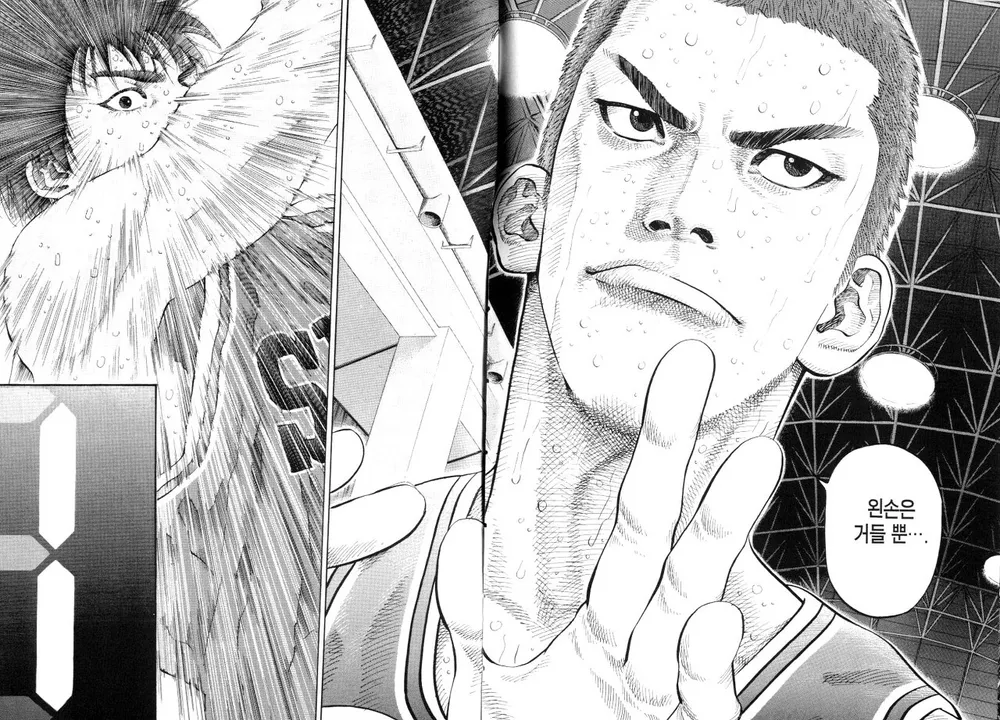
While reading the book, I suddenly thought of Sakuragi Hanamichi from Slam Dunk.

I used to be so serious about Slam Dunk that I even wrote a whole magazine series called Work Life Through Slam Dunk in Korean.
Honestly, Slam Dunk contains some of life’s greatest truths. If you haven’t read it yet, I highly recommend it.
And by the way, I own both the complete edition and the original version, so I could even lend them to you… assuming you live nearby.
The Guide Hand Only Guides
The biggest thing foundation AI models and Sakuragi Hanamichi have in common is the excellence of their engine.
A foundation AI model goes through a process called pre-training. In simple terms, it learns from text-based data. It tokenizes text crawled from the web and learns to predict the next word based on that data.
But there are two major problems here.
The first is that the data is just text. It is not naturally structured as conversation, so the model is not automatically suitable for chat.
The second problem is bad data.
Imagine if a foundation model had learned only from pornography sites and illegal gambling sites. Its answers would probably be very far from what we would call normal reasoning.
This is why post-training is necessary.
Through post-training, the foundation model becomes capable of chat-based interaction. It can also adjust biased or incorrect information through weight updates and alignment processes.
Sakuragi is similar.
Before the national tournament, Sakuragi shocks the top teams in his region with his natural talent. With his incredible athletic ability, he makes a huge contribution in the match against Shoyo and gets noticed by all the strong teams.
But Kainan’s coach, Riki Takato, quickly sees through him.
He puts a weak-looking player on Sakuragi and exposes the truth:
Sakuragi can’t even make a simple shot under the basket.
After losing to Kainan, Sakuragi goes through his first round of fine-tuning for the match against Ryonan. He practices his under-the-basket shot.
Then, after Shohoku earns its ticket to the national tournament, he goes through another round of fine-tuning.
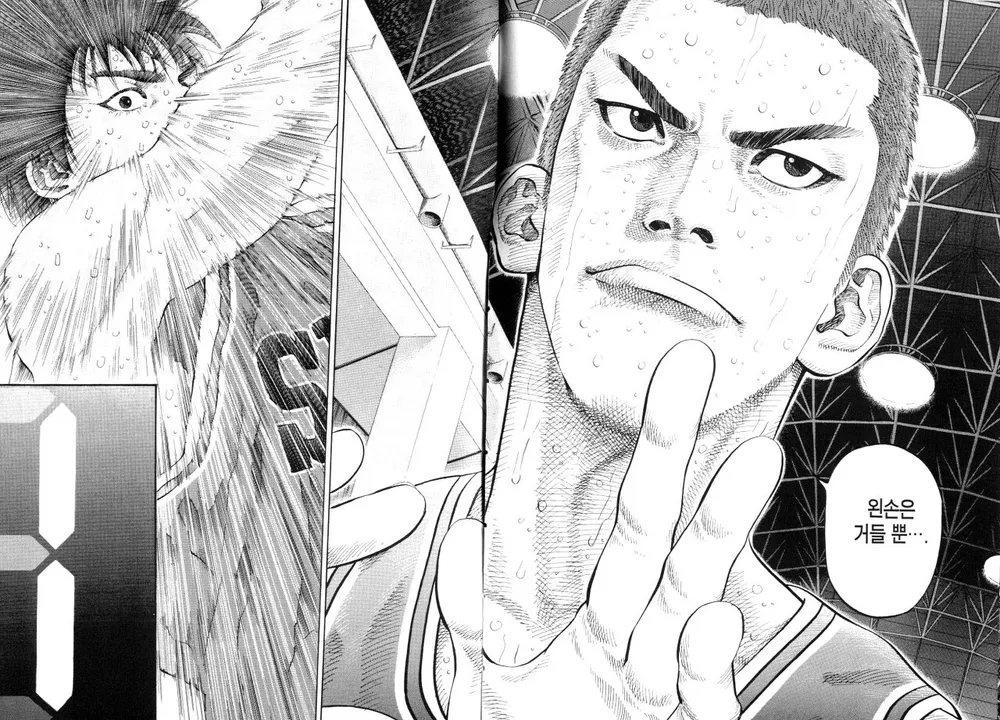
That training is the famous 20,000 jump shots.
During the break before the national tournament, Sakuragi throws 20,000 mid-range shots and completes his fine-tuning.
His final winning shot against Sannoh is the result of that training.
“The guide hand only guides” is not just a beautiful basketball lesson.
It is the result of fine-tuning.
AI Only Assists
While running the beta test for Kkaeumdan, I found myself thinking again about how slow and frustrating Sakuragi’s 20,000-shot training camp must have been.
The alarm app I am building with Claude, a foundation AI model, has a lot of bugs.
No matter how powerful AI is, it cannot magically fix every bug.
Getting the app to around 80% completion took less than an hour.
It was like Sakuragi receiving a few basic lessons from Haruko and immediately becoming one of Shohoku’s starting players. With just a bit of basic setup, the skeleton of an app can now be built almost instantly.
Most of the “Build an app in five minutes” examples you see on the internet and YouTube are exactly like this.
They are Sakuragi before he learns how to shoot.
But to turn that into a real product, you need the remaining 20% of fine-tuning.
And in reality, 90% of the time required to complete a product is spent on that fine-tuning.
Before foundation AI models appeared, even the initial groundwork took a very long time.
Now, thanks to foundation models, the groundwork can be finished in the blink of an eye.
But the real road toward product completion starts after that.
AI is just the guide hand.
You still have to take the shot.
The Road to Product Completion
Building a product with AI engineering is similar to the road to the national tournament.
First, you need a foundation model that has already gone through pre-training.
In other words, you need a powerful engine.
That is like recruiting a player with outstanding natural talent.
But even a talented player needs post-training.
You have to correct their broken shooting form. You have to shape them into someone who fits the team’s tactics.
That is fine-tuning.
A product built this way then receives feedback from testers.
By combining the overall direction with real user feedback, the product gradually becomes something that is both widely usable and smooth enough for the public.
It is the process of helping the product perform at the national tournament.
That is fine-tuning.
Get the next one in your inbox
One email per new post. No spam, unsubscribe anytime.
By subscribing you agree to our privacy & marketing email policy.