The Success Story of Crimson Desert: “We Didn’t Know What You’d Like, So We Put Everything In”
Rethinking the Meaning of Beta Testing Through Crimson Desert

As a former shareholder of Crimson Desert, I was someone who had an unusually deep interest in the game, even though I had never actually played it.
In fact, six months before its release, I had already saved the launch date in my phone calendar. After two long years of waiting, I was ready to finally take profit on my investment.
Then came launch day.
Gaming communities exploded.
People called it one of the worst games they had ever seen. They said it was full of bugs. They said the controls were impossible to tolerate. All kinds of harsh criticism poured in, and many players quit the game after just one day.
The stock price, which had risen dramatically before launch, dropped like a roller coaster. My +100% gain quickly turned into a +15% gain.
Afraid that it might soon turn into a loss, I sold my shares on launch day.
With only a 15% profit.
But starting the next day, something strange happened.
Memes and clips from Crimson Desert began spreading like wildfire across gaming communities. People started saying that while the first impression was terrible, the game somehow became more addictive the longer they played.
Many gaming YouTubers also returned to the game. One case I remember clearly was Pungwolryang, a Korean gaming YouTuber. At first, he said he would only play it for a day and stop. But the next day, he said it strangely lingered in his mind — and picked up the controller again.
For about a week, Crimson Desert content flooded the internet.
Eventually, the game reportedly surpassed 5 million copies sold.
And the stock price…
Well, to be honest, I never checked Pearl Abyss’s stock price again after that.
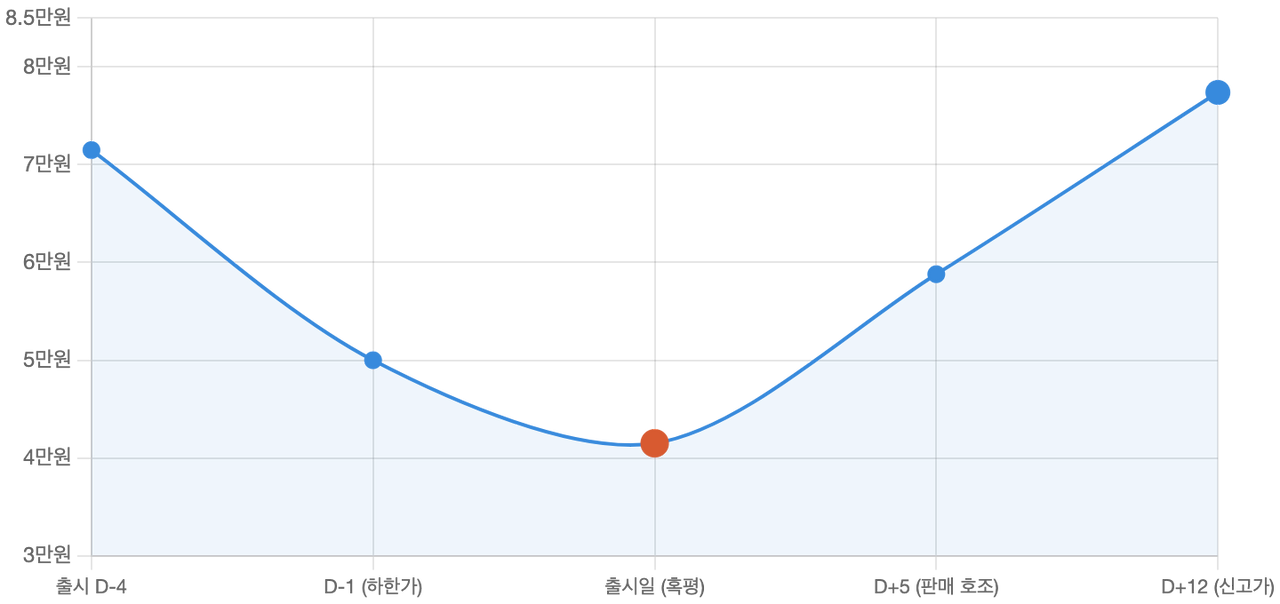 Stock price for Pearl abyss
But now that I have launched the beta version of my own service, Kkaeumdan, I keep thinking about Crimson Desert.
Maybe it is because of one brutally sharp piece of feedback I got from a friend.
Of course, Crimson Desert received a lot of criticism because of its bugs. But at the same time, it is very different from the Silicon Valley-style product launch model commonly known as the MVP approach.
MVP stands for Minimum Viable Product.
It is a product development methodology where you release a product with only the minimum necessary features, observe user reactions as quickly as possible, and improve the product through continuous updates.
This idea became especially influential around the 2010s, when many offline services were moving into mobile apps. It became one of the core product strategies that helped many Silicon Valley companies grow rapidly.
For example, if I wanted to launch a social networking product like Instagram, I would first make sure that the core features — following people and posting photos — worked properly. Then I would release it, observe how users responded, add more features, fix bugs, and gradually improve the quality of the product.
At first glance, Crimson Desert also seemed to follow a similar logic because the game received incredibly fast updates after launch.
But then again, this was a game that had been in development for seven years, backed by an investment of roughly $130 million.
So I will stop there.
The real reason Crimson Desert eventually succeeded was not simply because of its rapid updates.
It was because the team had poured everything into the content.
According to many players, the world of Crimson Desert contains almost everything one could imagine. After seven years of development, the game was described as a world where the developers put in everything they wanted to include — except, perhaps, a proper story.
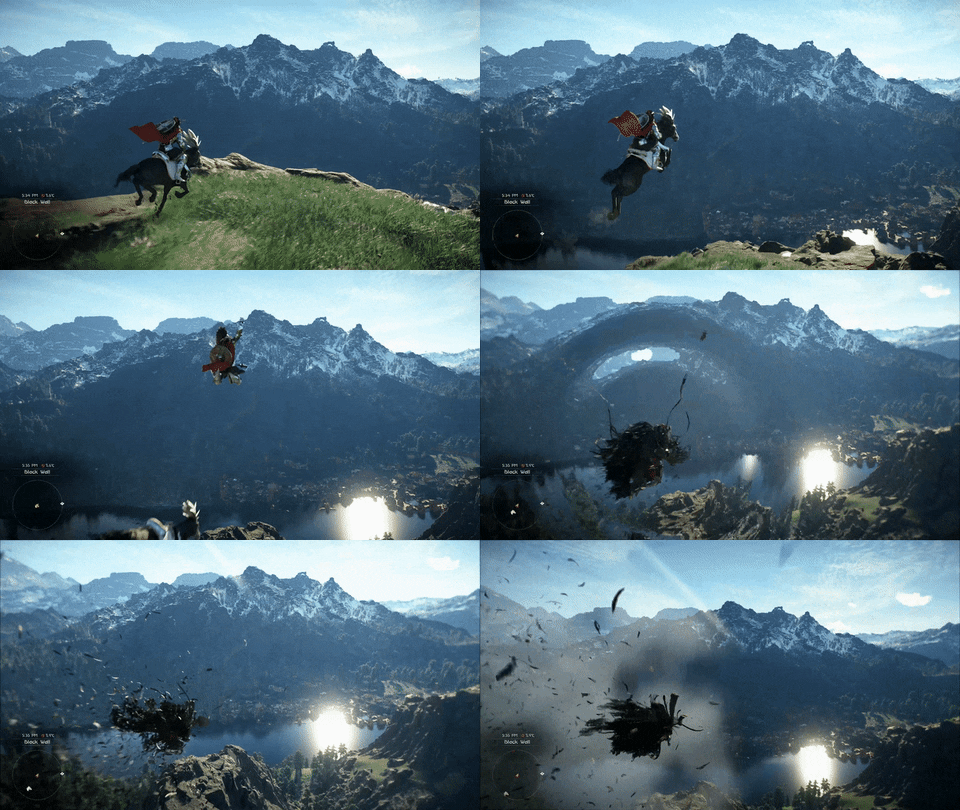 Everything features are included here
Watching this made me wonder whether the traditional MVP model has become harder to apply today.
After releasing the beta version of my own app, I have been receiving an overwhelming amount of feedback. And just like the Crimson Desert patch notes, I have also been updating the app at a frantic pace.
But I now believe that a product with only the minimum set of features is no longer enough to persuade people.
A minimum product may still be necessary.
But a minimum level of emotional impact is no longer enough.
Here is why.
1. Users’ Expectations Have Become Too High
Users are no longer impressed just because an application is new.
The 2010s were the era when O2O — Offline to Online — happened at an explosive pace.
Food delivery, which used to happen over the phone, moved online. Moving services, which people used to inquire about by phone, also moved online. Almost every service we could imagine shifted online, especially to mobile.
Perhaps the only categories that failed to move fully into mobile apps were those outside or near the edge of legal boundaries — things like online gambling or pornography. Those services had no choice but to remain mostly on the web because they could not pass mobile app store regulations.
From 2010 to 2026, almost every kind of offline service moved into mobile. Over those 15 years, we accumulated experience using all kinds of mobile apps.
And through those experiences, the small inconveniences we used to tolerate are no longer tolerable.
A simple example is Korea’s old digital certificate system.
Looking back, I honestly wonder how we ever used that thing. Just as I could never go back to that era, the mindset of “it is a little inconvenient, but it is new, so I will try it” no longer exists for most people.
Now, AI has brought us into an age where anyone can build a mobile or web application.
It seems that many people are creating their own personal apps using tools like Claude Code. But most of these applications are little more than personal toys.
Why?
Because they do not have a structure that allows meaningful data to accumulate.
Even if some data is collected, these apps may only become communication tools among acquaintances. If KakaoTalk or Naver launches a similar service, users will inevitably move there.
As countless applications are created, personalization becomes easier.
But the number of applications that can actually become products has not increased that much compared to the 2010s.
In that environment, is launching with a simple MVP really the smartest way to stand out?
2. Development Cycles Have Become Extremely Short
In the past, a product that required a team of three or four people can now be built by one person in a week.
Since one person can handle design, development, and planning, the process can move much faster.
But unfortunately, that also means more errors are inevitable.
Still, if you ask me whether a team of three or four people working for three or four months would catch all the bugs in advance, I honestly do not think so.
Bugs will happen even when a team builds the product.
Crimson Desert, which impressed me in its own strange way, had seven years of development and roughly $130 million behind it — and still launched with countless bugs.
Development cycles that used to take three to six months, or even one to two years, will soon shrink into cycles of just a few weeks.
Code will be generated by bots running day and night without rest.
Development cycles will continue to accelerate.
And naturally, more bugs will appear.
So what matters?
User feedback.
I believe nothing is more accurate than feedback from real users.
There is always a strange gap between what planners, designers, and developers focus on internally, and what consumers focus on when they actually use the product.
If outsiders can quickly spot and communicate the holes that insiders cannot see, that may be the most ideal product launch model.
That is why the MVP model emerged in the first place.
And that is also how the application ecosystem has managed to evolve until now.
Crimson Desert, MVP, and Kkaeumdan
I have only launched one Android app, but there is already far more to do than I expected.
Of course, there are product-related issues. But if I had to name the area where I am most lacking, it would be network.
I do not have much of a network in real life, and I have almost no network online either.
If you look at my update notes, you can see that in just one day, I added five new features, made four improvements, and fixed four bugs. And today, May 28, I am preparing another update with almost twice that number of improvements.(It is Korean, sorry for non-Korean)
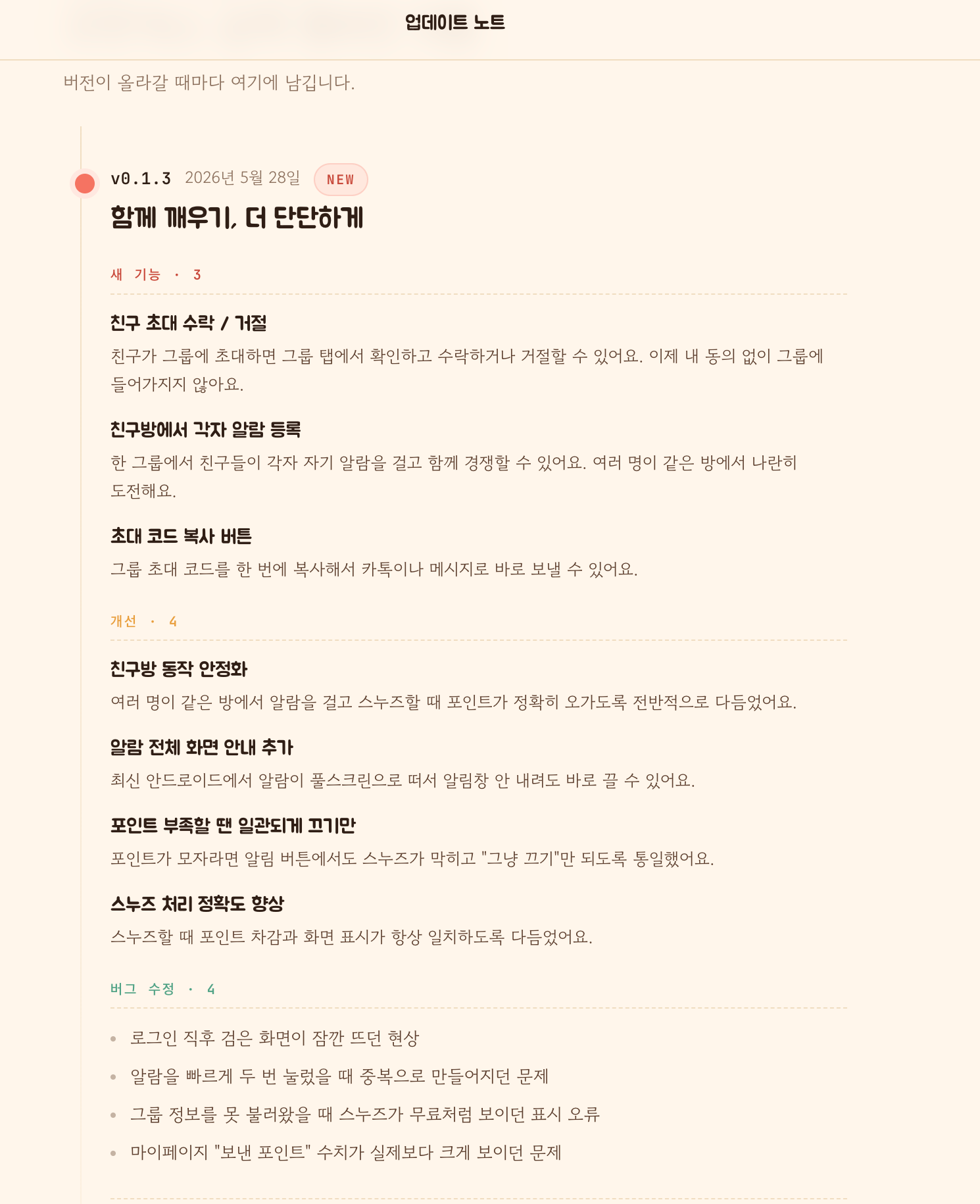
Just as Crimson Desert succeeded because it had everything inside it, I also want to put as many meaningful features as possible into Kkaeumdan during the beta period.
I want users to open the app and gradually find themselves falling into the experience.
One friend told me that the app seemed too large in file size for something that did not appear to have many features.
From a developer’s perspective, I felt that quite a lot of functionality had been included. But from a user’s perspective, I can understand why it might feel like there is not much there.
It is similar to building a bulletin board. Creating even a basic bulletin board is actually quite difficult. But when users see the finished version, it does not look difficult at all.
That is why, during this beta period, I want to put as much as I can into Kkaeumdan.
I do not want it to be just an alarm app. I want it to become an experience of waking up together with someone else.
A record that encourages you to try again even after failing. A small routine that quietly becomes part of your morning before you even realize it.
Just as Crimson Desert was criticized at first but eventually pulled people into its world, Kkaeumdan may feel rough in the beginning.
There may be bugs.
There will be things that are still lacking.
But this is the stage where we can accept feedback the fastest and fix things the fastest. If you find it difficult to wake up alone every morning, or if you want to build a small routine together with a friend, I hope you will give it a try.
Kkaeumdan is not a finished app yet.
It is closer to a beta service that we are building together.
I believe this app can make someone’s morning feel a little less lonely.
Look around my Beta application if you are interested, but it is only available in Korea.
Get the next one in your inbox
One email per new post. No spam, unsubscribe anytime.
By subscribing you agree to our privacy & marketing email policy.