Why “Can I Use Stripe in Korea?” Is the Wrong Question
For foreign entrepreneurs, the biggest hurdle in Korea is not the product — it is the process.

If you are planning to bring your startup into Korea, you have probably already searched “Can I use Stripe in Korea?” Half the results say yes. Half say no. The confusing part is that both are correct.
Press enter or click to view image in full size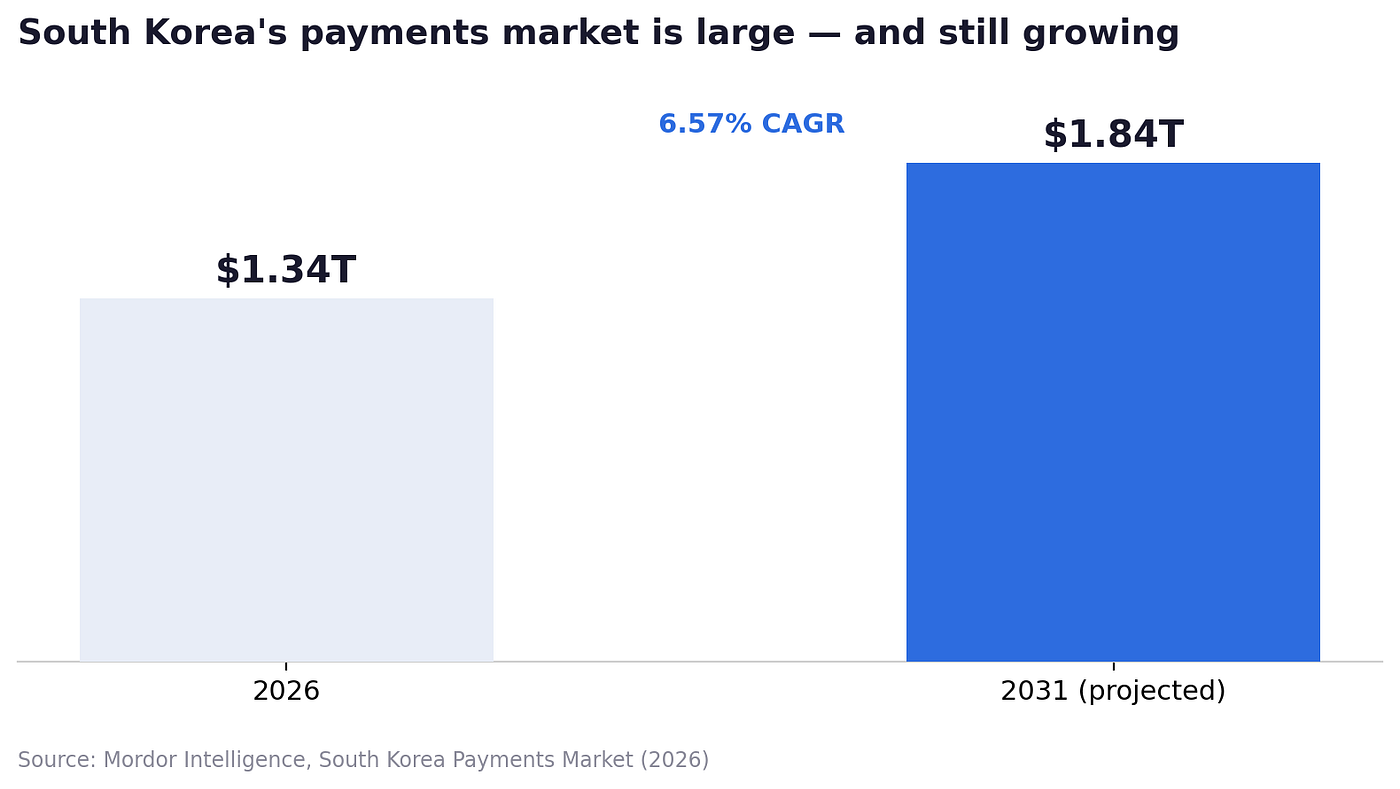
If your company is registered in Korea, you cannot open a Stripe account at all. But if you are a foreign company, you can accept payments from Korean customers — as long as you price everything in Korean won (KRW), with a few extra conditions. If you do not know this difference, you can get the very first step wrong.
The real problem is not Stripe
Stripe is only the beginning. To actually accept payments in Korea at any scale, you will need to connect a local PG (payment gateway), such as Toss Payments or KG Inicis. And this is the part that surprises many foreign founders.
I once connected a PG to a Korean service. The thing that surprised me was not the technology.
It was the process.
Outside Korea, you sign up for Stripe online and start charging cards in a few minutes. Korea is different.
First, you need a business registration. Then you have to file a separate “mail-order business report” at your local district office, or online through the government portal.
Your online store has to be almost finished before you apply — your site footer must show your company name, the representative’s name, and your business registration number, and every product needs its shipping, return, and refund policy. Only then will the PG accept your application.
And the application is not the end. The PG company and the card companies review your site directly. It usually takes about 7 to 10 business days before you can actually take a payment. Settlement is not instant either — the money arrives a few days after the transaction.
For a foreign founder, this is surprising. “Let’s just turn on payments and start selling” does not work here. To accept money, your company, your site, and your policies all have to be ready first. The order is the complete opposite.
If you run a subscription, there is one more step
If you have a subscription business, there is one more layer: recurring payments.
Outside Korea, a customer enters their card once and it charges every month automatically. In Korea, turning on recurring payments is another process.
For card-based recurring payments, you need to issue a “billing key,” which requires identity verification, and you have to build the recurring logic yourself with an API. Direct bank withdrawal (called CMS) is even more complex: you register through a clearing institution, and you have to collect each customer’s withdrawal consent one by one — by signed form, voice recording, or ARS phone confirmation. The registration alone takes a few more days.
I once set up recurring bank payments through NICE Payments for a service. What I thought was simply “make it charge every month” turned out to be a process with many steps I did not expect.
The common mistake, and what it costs
So here is the assumption many foreign startups make:
“Our payment stack is global standard, so it will just work in Korea.”
It will not. Korean customers do not trust unfamiliar foreign checkout pages, and if you do not offer KakaoPay, Naver Pay, or Toss, many of them leave right before paying.
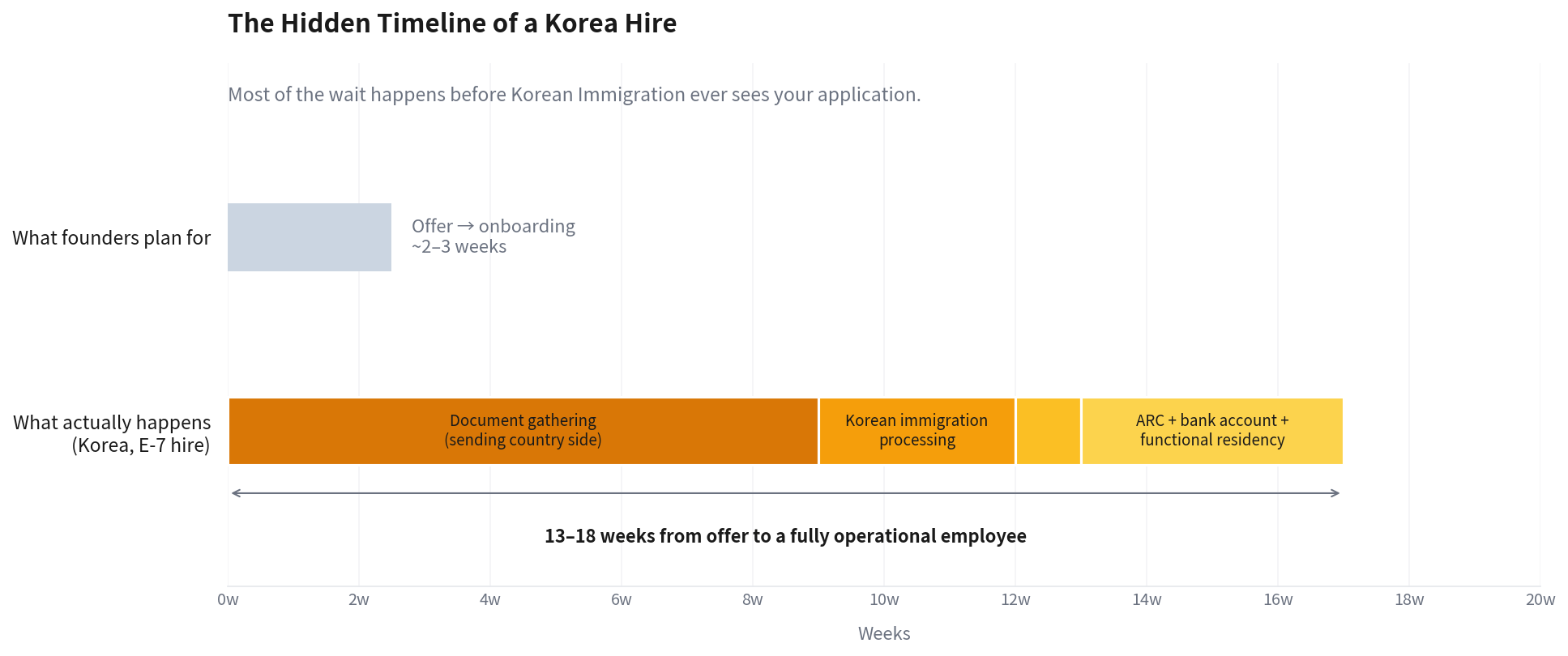
Teams that planned a few days for payments often see the timeline slip by several weeks, and the launch date moves. They came for the market size, and then got stuck because they could not open the channel to actually get paid.
Press enter or click to view image in full size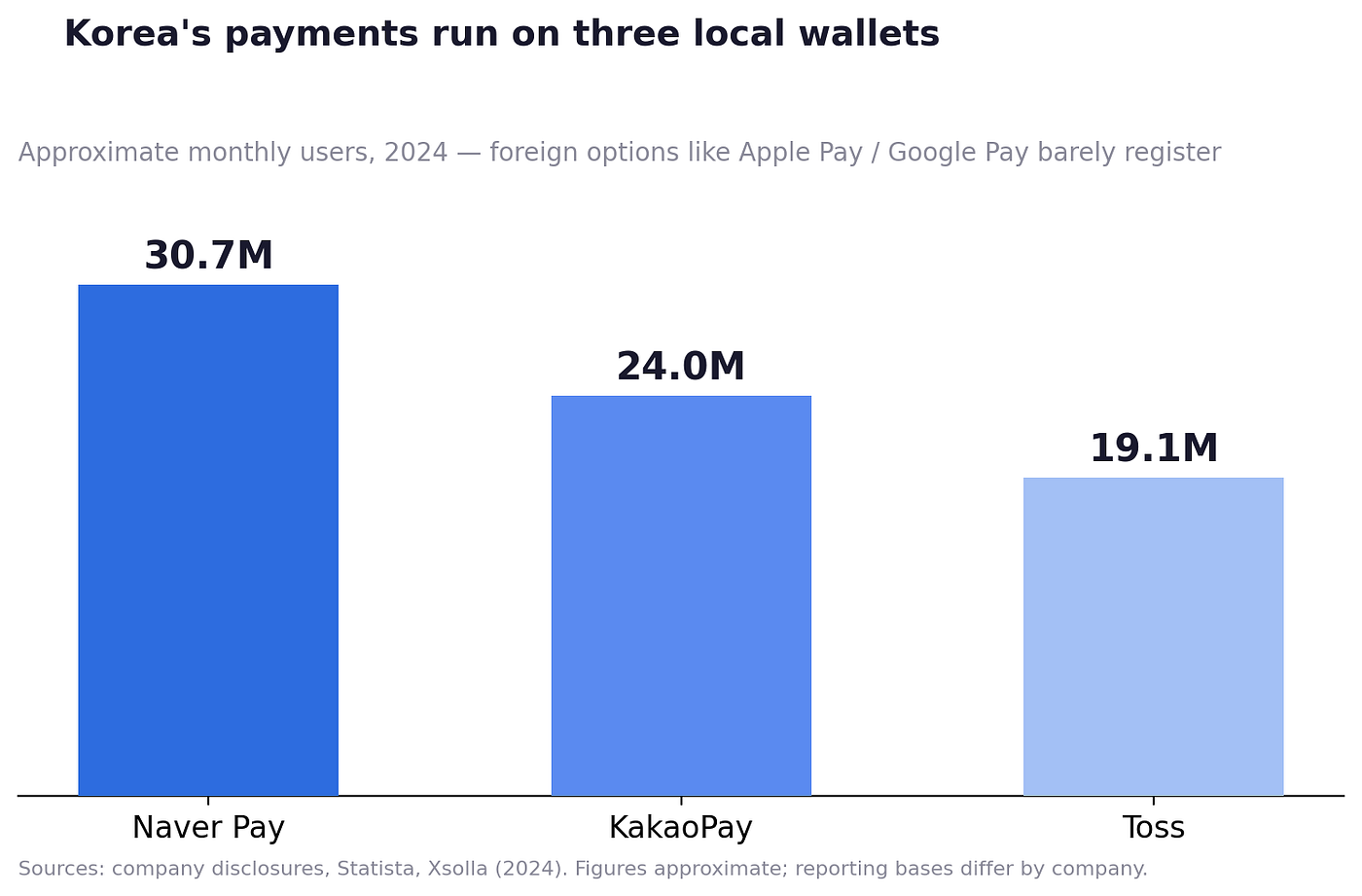
Payments are only the first signal
Messaging is KakaoTalk. Search is Naver. Payments are Toss and KakaoPay. Korea is a market with many local ecosystems where global defaults do not apply.
So entering Korea is not “adding one more market.” It is closer to rebuilding the stack you already have, for Korea. Payments are simply the first — and the most painful — thing that tells you this.
Whether you learn this before you enter or after is what makes the difference in your first six months.
I spent over a decade running operations and business development inside Korean companies — the kind of ground-level knowledge that doesn’t show up in a search result. If you’re weighing a move into Korea, I do 1:1 strategy sessions to pressure-test your plan before you commit budget to it. Reach out at https://www.linkedin.com/in/nakknock007/— happy to walk you through what you’d be walking into.
Get the next one in your inbox
One email per new post. No spam, unsubscribe anytime.
By subscribing you agree to our privacy & marketing email policy.